Styles / Vernacular & studio
Ottoman imperial studio photography (Pera)
- Key: a softbox, about 40° to the camera’s left, high, soft.
Key high: about 30–45° above eye level, angled down.
Schematic, not to scale: worked out from the style’s choices. No set-up of this style has been rendered yet.
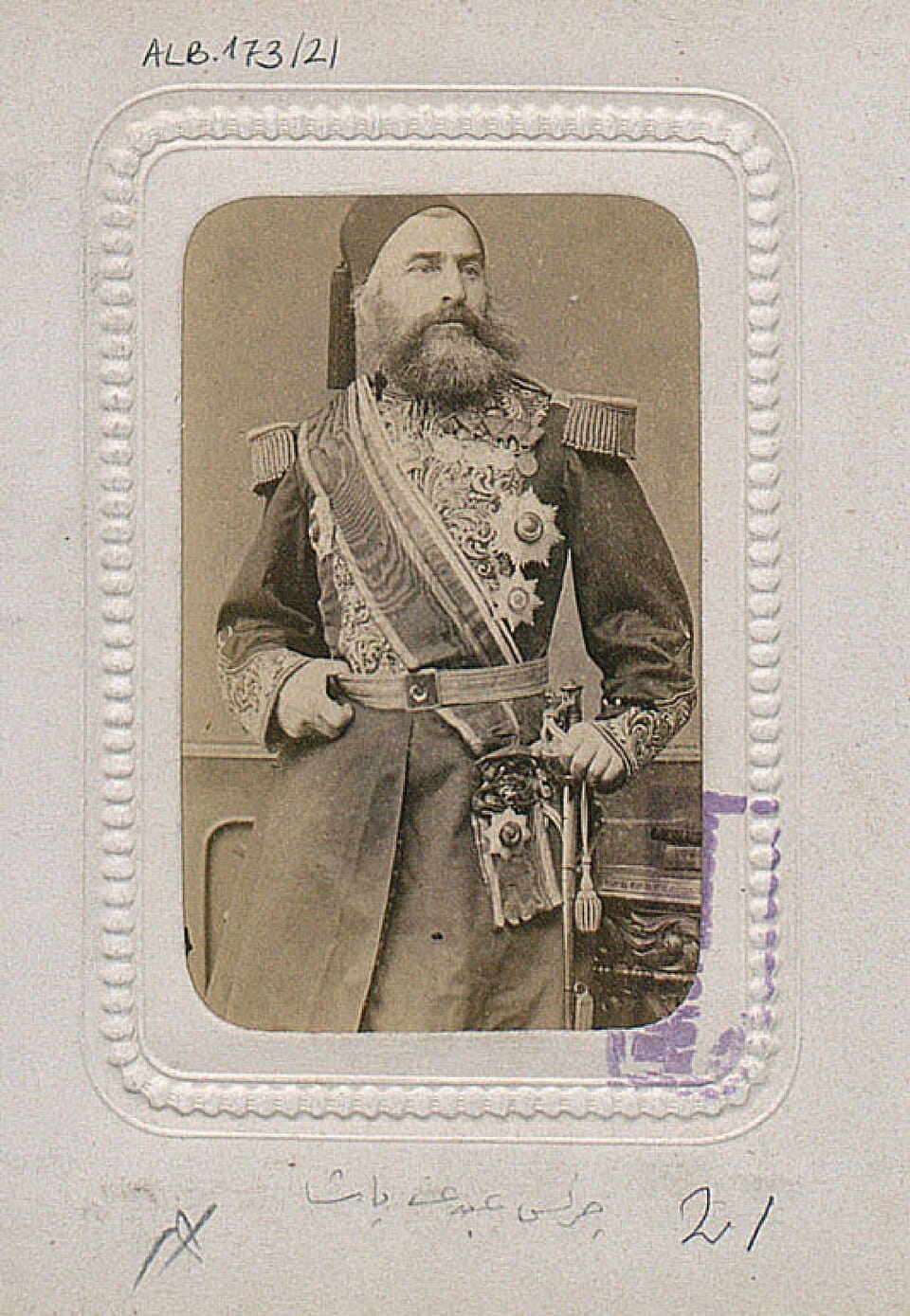
Portrait of Çerkes Abdi Pasha
Abdullah Frères, Portrait of Çerkes Abdi Pasha, Yıldız Palace Albums (Alb_000173/021), İBB Atatürk Library, Istanbul. Public domain via Wikimedia Commons. Source: Portrait of Çerkes Abdi Pasha at İBB Atatürk Library, Yıldız Palace Albums (via Wikimedia Commons)

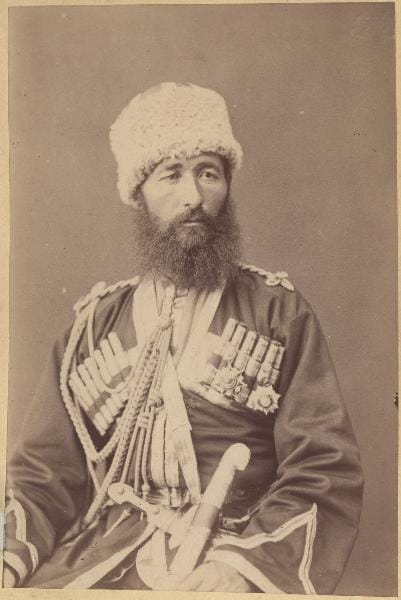
Circassian officer
Pascal Sébah, Circassian officer, c. 1876-1886. Lombardia Beni Culturali, public domain via Wikimedia Commons. Source: Circassian officer at Lombardia Beni Culturali, via Wikimedia Commons

Studio portraits, with some city views, made in Constantinople by court-appointed, locally based Ottoman studios (Abdullah Frères being Armenian): pashas, officers and foreign visitors stand or sit in uniform, rank or provincial dress before a plain or painted backdrop with a carved chair or table, in soft glass-roof daylight, on warm albumen cartes and cabinet cards. Unlike the carte-de-visite, uniform and status objects lead; the same studios also photographed mosques and streets for imperial albums.
Built on two systems: Painted studio and Albumen view. What systems are.
Shoot sheet for your kit A prompt for an image model The photographs
How the look is made
- Dress the sitter for rank: full uniform with sash, epaulettes, orders and sword, or the costume of their province or office, and let the decorations and weapons be seen.
- Pose the figure upright and still: standing with one hand on the sword hilt or belt, or seated square on a carved chair, three-quarter turned, eyes level or just aside, face composed.
- Build a plain studio set: a neutral or lightly painted backdrop, a carved chair or table at the edge, a rug underfoot, nothing that competes with the dress.
- Light from a glass roof and a side window: soft, broad daylight with open shadows and a gentle fall-off at the edges of the frame, no hard shadow on the face.
- Print on warm toned albumen, small for the carte and larger for the cabinet card or album page, and mount the prints in numbered albums and presentation volumes.
- Take the camera out into the city for occasional views (a minor strand here): stand square to a bridge, mosque or street, keep it sharp and evenly lit.
Shoot sheet for your kit
Fill in your camera, lenses and lights, and the sheet says which light plays each part, what to work around and where to start on your camera. Without a kit it starts on a full-frame camera.
Light
Key: a softbox, about 40° to the camera’s left, high, soft.
- Key high: about 30–45° above eye level, angled down.
- Shadow edges
- Shadows that fade gradually from light to dark, cast by a large or diffused light: a window, a softbox, a cloudy sky.
How the style is lit
- Soft, broad daylight from a glass studio roof with a side window, shadows open and the backdrop evenly lit.
- Even outdoor daylight for city views, the scene sharp from the front to the far buildings.
This plan is worked out from the style’s choices, so it is drawn as a schematic. One way to get the light, not a record of how any photograph was lit.
Lens and settings
Start at
On a full-frame camera: the same depth of field and exposure as the style’s own numbers, in the same light. Then meter and adjust.
- The style’s f/9.5 on Quarter plate gives about the depth of field of f/3 on full frame.
- Then
- 40–60 mm · f/5.6–f/16 · 1–8 s · ISO 1–10 on Quarter plate, inferred from the gear and the look. Format, focal length, aperture, shutter and ISO are all inferred (no source states them). Inferred from the process and the look, not stated by the studios: collodion at about ISO 1 (later gelatin plates) under a glass roof needed seconds, so sitters held still against posing supports; views were stopped down. Format and lens varied from carte-size multi-lens plates to whole-plate view cameras.
- Angle
- The camera at the height of a standing person or of the subject.
- Distance
- Whole figures and their immediate surroundings.
- Balance
- The subject in the middle, the frame balanced around it.
- Crop & fill
- The subject shown small within its setting, which explains it.
- Duration
- An unmoving scene, exposed slowly and carefully.
Direct
Stand the sitter upright and still, turned three-quarters, one hand on the sword hilt or tucked into the sash or belt and the other resting on a chair back or table; or seat them square on a carved chair with hands on the knees. The face is composed and unsmiling, eyes level or just aside; officers and officials show the dress, not a mood.
- Body position
- Upright, weight on both feet, shoulders level: the plain, even stance of a formal sitting or a line-up. On a chair or stool, back straight, hands and feet placed: the formal sitting.
- Turn to the camera
- The body, the head or both turned about 45° from the lens, so one side is nearer the camera and the far ear is hidden.
- Head & gaze
- Eyes off the frame, past the camera or into the distance, as if lost in thought.
- Line & energy
- Rigid and motionless, sometimes braced against a head rest or gripping a chair: held for a long exposure or a solemn occasion.
- Expression
- Unsmiling, composed and blank: the face gives nothing away.
- With the sitter
- The sitter arranged and still, facing the camera.
Style the set
Full dress for the sitter's rank or place: military or court uniform with epaulettes, sash, orders and a sword, or the robes and headdress of a province or office; foreign visitors in a frock coat or travelling dress. The studio supplies a plain or lightly painted backdrop, a carved chair or table and a rug; the dress and decorations are the picture.
- Clothes
- The clothes of a trade, a rank, a team or an institution. The wearers’ own festive, religious or wedding clothes: saris and lehengas, boubous, robes, kimono. Best clothes, jewellery and accessories put on for the studio or the occasion.
- Set & props
- Things shown to say who the sitter is or wants to be, their own or lent by the studio: a radio, a bicycle, a watch, books, tools. A painted, cloth, paper or seamless backdrop behind the subject. The stock furniture of a portrait studio, standing in for a setting: a posing chair, a column, a balustrade, a draped table, a potted palm.
Finish
- Monochrome
- A monochrome image tinted sepia, brown, selenium purple or cyanotype blue.
- Colour
- An overall yellow, orange or red cast.
- Early processes
- Warm-brown prints of the 19th century, made from negatives.
- Post-production
- Nothing changed beyond exposure and development.
- Shown in
- Prints for an album, a card or a frame at home.
Stay away from candid & unobserved, snapshot, tilted angle, visible grain, direct on-camera flash, laughing, fast, full-body movement, unstyled, as found, black shadows, hand-coloured and smiling.
Before you shoot it
These are portraits of real people, many named sultans, pashas, officers and visitors, and the albums served an imperial state: Abdulhamid II's 1893 albums were made to show the empire to the world and were given as diplomatic presents. Studio sets of models in provincial costume also turn people into types. The studios were locally based Ottoman firms; Abdullah Frères were Armenian, and the history of their community after 1915 is part of the context of their record.
A prompt for an image model
A ready prompt that describes this look to an image model: where the lights stand, the lens, the framing and the colour. It starts on the style’s own choices; change any of them and the prompt and the notes follow.
The prompt
Notes on this prompt
- How the style uses it: build a plain studio set: a neutral or lightly painted backdrop, a carved chair or table at the edge, a rug underfoot, nothing that competes with the dress. Image models put the light in the wrong place more often than anything else, so the prompt says where each light stands: which side of the picture, and how high. Keep to one light pattern per prompt, or the model splits the difference.
- Describe an invented person by age, clothes and pose. Never name a real or famous person, and never write “looks like”.
- Black and white: colour words in the subject (a red dress, green leaves) can pull the model back to colour, so leave them out.
The model makes a new picture, not a photograph of anything that happened. Label it as AI-generated, and don’t pass it off as the style’s history or as a real person.
Photographs that define it
From open collections, shown whole with their credits. Later photographs are linked, not shown, while they are in copyright.
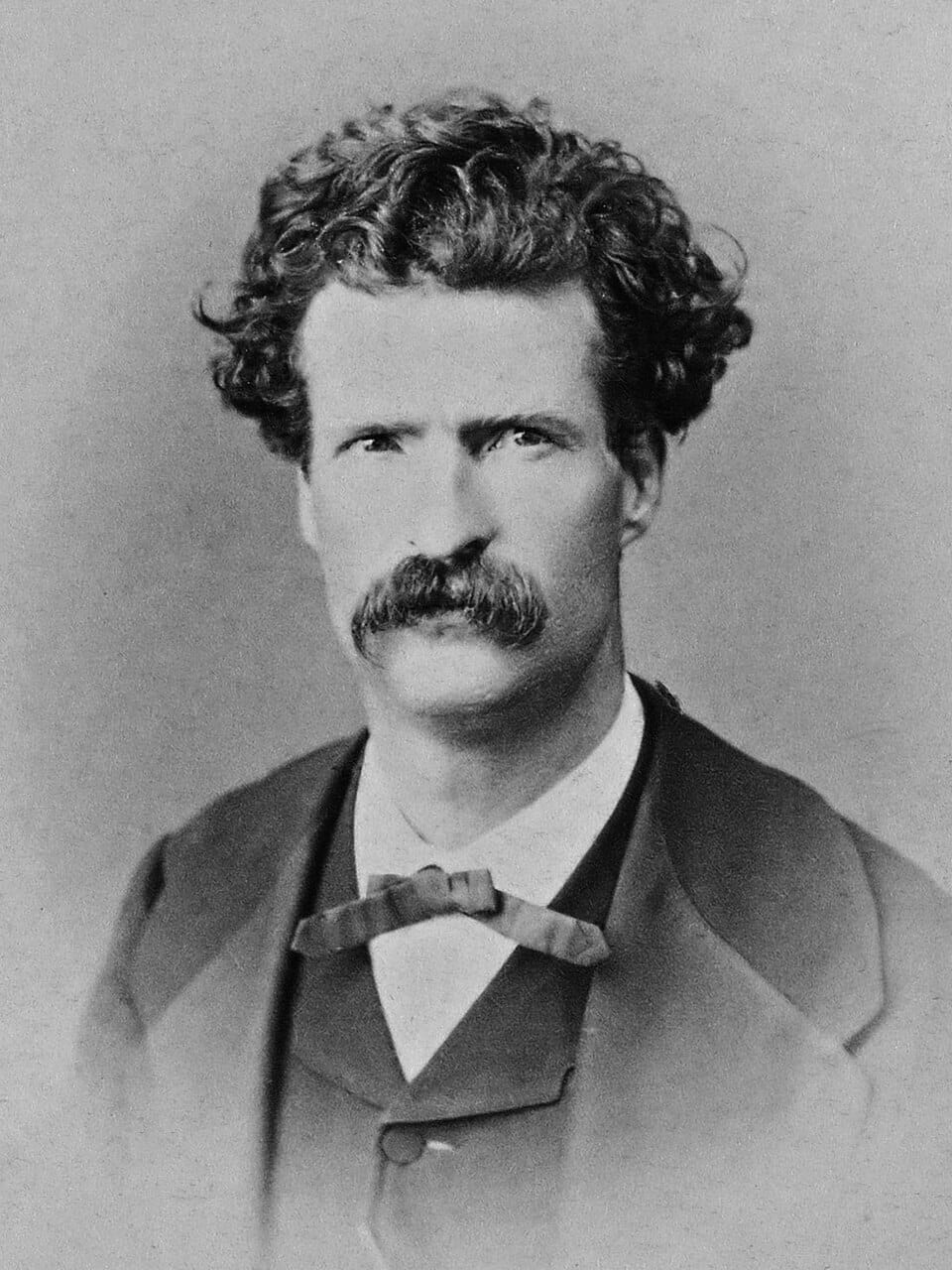
Mark Twain, age 31
Abdullah Frères, Mark Twain, age 31, 1867. Library of Congress, public domain via Wikimedia Commons. Source: Mark Twain, age 31 at Library of Congress, via Wikimedia Commons

Made by an AI model
An image gpt-image-2 made from this style’s choices, then checked against them by a vision model. Not a photograph, and not part of the style’s history. All generated images
-
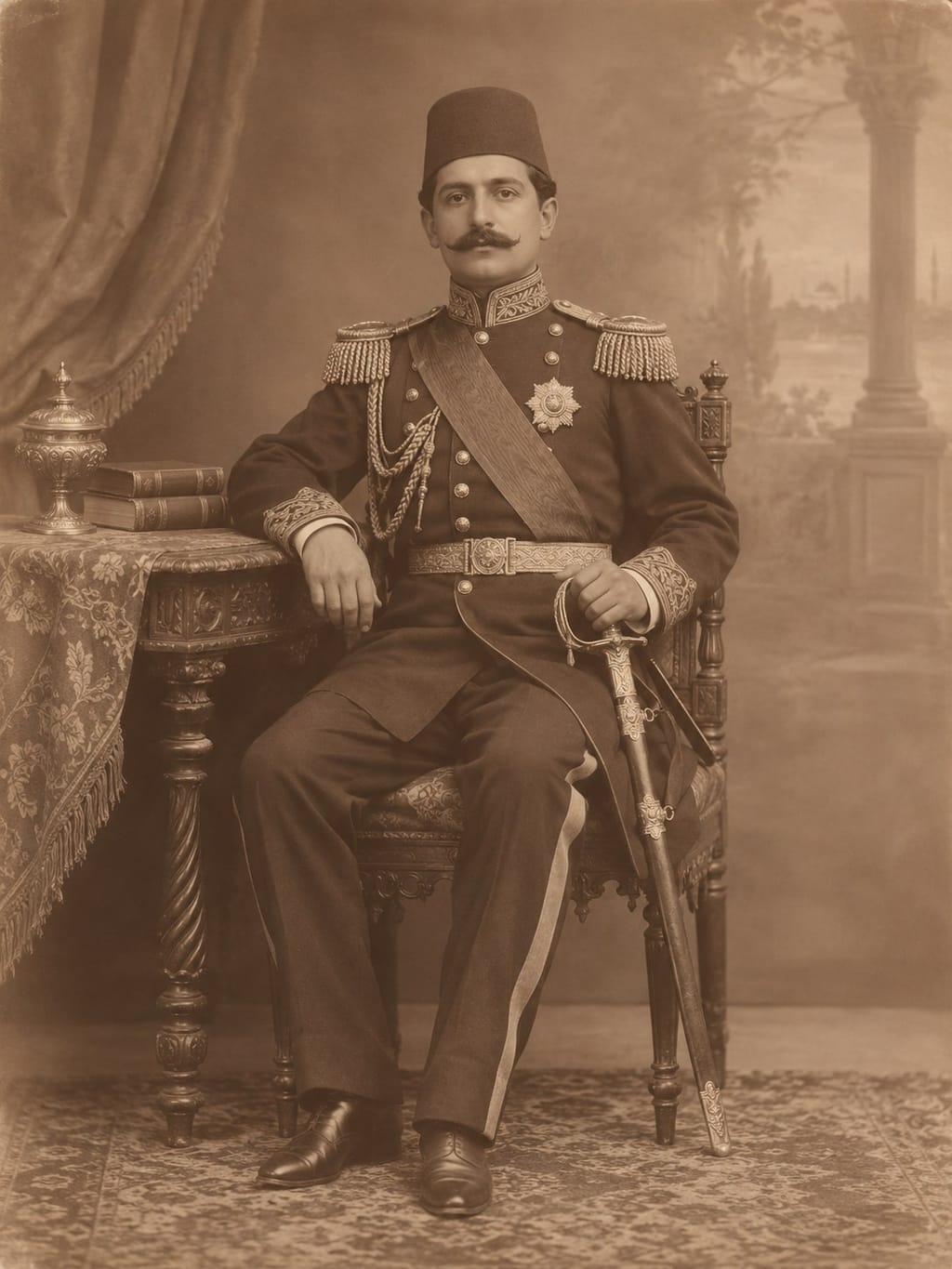
A sepia-toned full-length studio portrait shows a moustached man wearing a fez and an ornate military uniform, seated on a carved chair with one hand on a sheathed sword. Beside him is a draped table holding books and a decorative lidded vessel, with a curtain and painted architectural backdrop behind him. What the check saw. The formal pose, elaborate military dress and aged sepia finish give the cover the stately atmosphere of a historical studio portrait.
With other styles
Pairs with Carte-de-visite studio portraits. Borrow the carte's mount, full-length plan and warm albumen print; what separates this style is uniform and status objects at full weight (0.3 in the carte), local dress and a plain backdrop, plus occasional city views. Near neighbours among court and Levantine studios (the drafted qajar-court-photography: square-on pose, brocade, palace set; levantine-orientalist-studio-photography: exotic types sold to visitors) differ in pose, set and sitter; here the sitter is a named client in their own rank or office dress.
The opposite: Yokohama photography. Yokohama's studios hand-coloured prints and staged hired models for tourists; keep Pera's uncoloured, sitter-chosen dress and let the sitter be the client.
Pairs with Malian studio portraiture. Both are local studio portraits where the sitter's own dress and objects carry status; combine Pera's decorated formal pose with a sitter-chosen set.
Sources
- Abdullah Frères, Wikipedia: https://en.wikipedia.org/wiki/Abdullah_Fr%C3%A8res (brothers Vichen, Hovsep, Kevork; studio taken over in 1858; named official court photographers by Sultan Abdulaziz in 1863 and used the title until closure in 1899; Pera from 1867; Cairo branch 1886; portrait of Mark Twain 1867; views of Galata)
- Sébah & Joaillier, Wikipedia: https://en.wikipedia.org/wiki/S%C3%A9bah_%26_Joaillier (Pascal Sébah's Constantinople studio by the early 1870s; renamed Sebah & Joaillier in 1888; 51 albums sponsored by Abdulhamid II in 1893, two by the firm; a copy went to the United States, now in the Library of Congress)
- Portrait of Çerkes Abdi Pasha, Yıldız Palace Albums, İBB Atatürk Library, via Wikimedia Commons: https://commons.wikimedia.org/wiki/File:Portrait_of_%C3%87erkes_Abdi_Pasha_by_Abdullah_Freres.jpg (carte-format portrait in an album, Alb_000173/021, before 1880)
- Mark Twain by Abdullah Frères, 1867, Library of Congress, via Wikimedia Commons: https://commons.wikimedia.org/wiki/File:Mark_Twain_by_Abdullah_Fr%C3%A8res,_1867.jpg (public domain portrait made in Pera, September 1867)