Styles / Pictorialist
Russian pictorialism
- Key: a softbox, about 40° to the camera’s left, high, soft.
Key high: about 30–45° above eye level, angled down.
Schematic, not to scale: worked out from the style’s choices. No set-up of this style has been rendered yet.
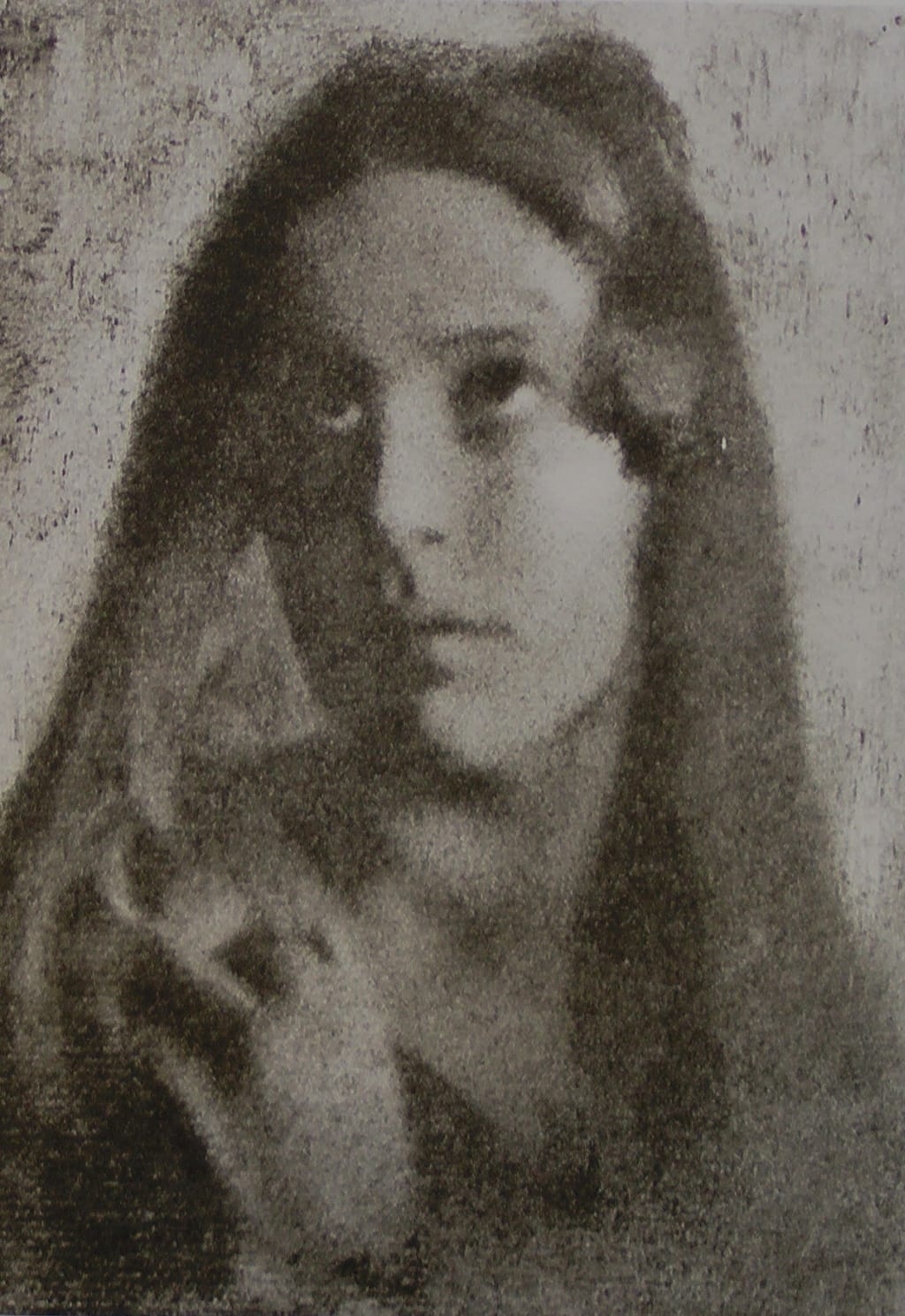
Madonna
Yuri Yeremin, Madonna, 1914; public domain in Russia and the US (Wikimedia Commons). Source: Madonna at Wikimedia Commons, from Iskusstvo, Moscow, 1966

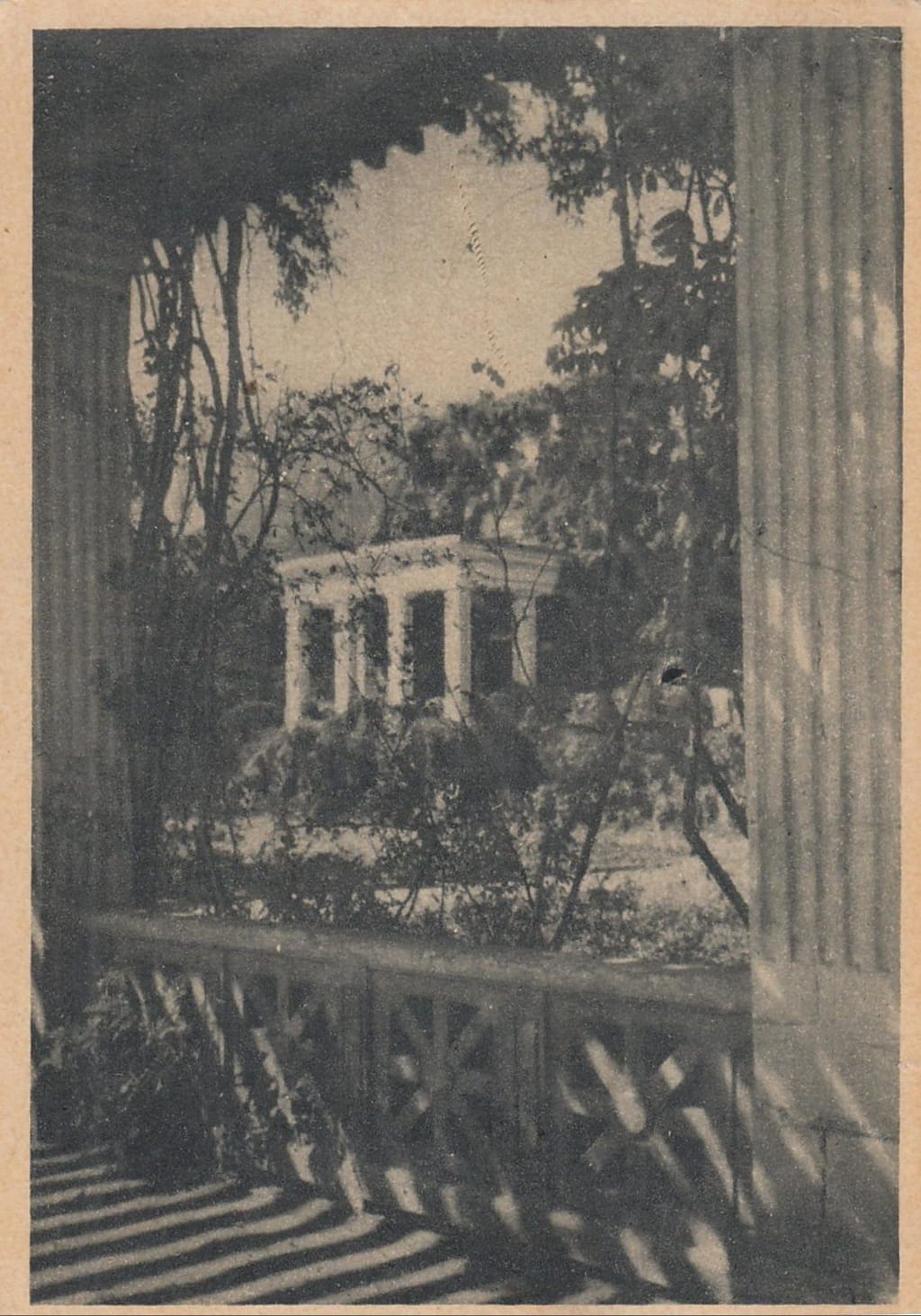
Chair Park, Crimea (postcard, attributed)
Chair Park, 1925, postcard attributed to Yuri Yeremin on Wikimedia Commons via a PastVu uploader citation (it may be a postcard he published rather than made); public domain (PD-Russia-expired, PD-US). Source: Chair Park, Crimea (postcard, attributed) at Wikimedia Commons, via PastVu

Painterly Russian art photography of 1900-1935: Moscow streets, Crimean and Caucasian views, provincial landscapes and veiled portraits, framed through columns or branches, shot soft and printed by hand in bromoil, gum or toned bromide, in browns and greys. A spiritual, elegiac note; later suppressed and printed in secret. Its difference from pictorialism is mostly context: Russian subjects, the period and the suppression.
Built mostly on one system: Pictorial print. What systems are.
Shoot sheet for your kit A prompt for an image model The photographs
How the look is made
- Choose motifs with a spiritual or elegiac mood: old Moscow gates and churches, misty river and night views, Crimean villas, a veiled sitter, and treat them as pictures to be felt, not records.
- Frame the view through something near: a column, an arch, a leaning branch or a balustrade, so that dark foreground masses lead the eye to a lighter distance.
- Soften on purpose: use a soft-focus or single-element lens, shoot into hazy or raking light and keep detail subordinate to mass and tone.
- Make the print by hand: bromoil, gum bichromate or a toned bromide in brown or sepia, brushing or lifting ink and working highlights and darks until the picture reads like a charcoal drawing or an etching.
- Keep the picture one lyrical piece, mounted and shown singly; where exhibiting is dangerous, print small and keep it private.
Shoot sheet for your kit
Fill in your camera, lenses and lights, and the sheet says which light plays each part, what to work around and where to start on your camera. Without a kit it starts on a full-frame camera.
Light
Key: a softbox, about 40° to the camera’s left, high, soft.
- Key high: about 30–45° above eye level, angled down.
- Shadow edges
- Shadows that fade gradually from light to dark, cast by a large or diffused light: a window, a softbox, a cloudy sky.
- Shadow depth
- Dark shadows that still hold some detail (a high lighting ratio, about 4:1 to 8:1: the shadow side two to three stops darker).
How the style is lit
- Hazy or raking daylight on a street, park or shore, shooting into or across the light so masses go dark and the distance goes pale.
- Dappled light through a colonnade, balustrade or branches, with the cast shadow pattern kept in the foreground.
- North window or daylight studio, soft and from one side, on a veiled or draped sitter against a dark ground.
This plan is worked out from the style’s choices, so it is drawn as a schematic. One way to get the light, not a record of how any photograph was lit.
Lens and settings
Start at
On a full-frame camera: the same depth of field and exposure as the style’s own numbers, in the same light. Then meter and adjust.
- The style’s f/13 on 9 × 12 cm gives about the depth of field of f/3.8 on full frame.
- Then
- 35–70 mm · f/8–f/22 · 1/100–2 s · ISO 10–100 on 9 × 12 cm, inferred from the gear and the look. No exposures are recorded for the specimens. Numbers are inferred from plate cameras and slow emulsions of the period, with f-numbers for a 9 x 12 cm plate; soft-focus lenses are used open, and street views on stopped-down lenses with a tripod.
- Focal length
- Roughly the eye’s own perspective; no visible distortion.
- Focus
- A soft glow around highlights; edges never quite sharp.
- Angle
- The camera at the height of a standing person or of the subject.
- Distance
- Whole figures and their immediate surroundings.
- Depth
- Doors, windows, mirrors or arches frame the subject again. Separate events in the foreground, middle ground and background.
- Duration
- An unmoving scene, exposed slowly and carefully.
Direct
Where a person appears, pose a single sitter still, in a three-quarter or head-and-shoulders view, eyes lowered or turned off the lens into an absorbed, quiet look; keep the face neutral and the hands out or at rest. Most pictures hold no figure, or a small one in a distant street.
- Without a pose
- No people at all, or people so small or far off that their pose does not read (hands alone are Hands alone).
Style the set
Dress sitters in a plain veil, shawl or simple dark clothes with no visible make-up and nothing glamorous; in views leave the scene as found, with old gates, monuments, villas and boats, and use only what the place gives, such as branches or columns, for the frame.
- How much is styled
- Nothing dressed, made up, moved or added for the picture.
Finish
- Monochrome
- Low contrast and gentle greys. A monochrome image tinted sepia, brown, selenium purple or cyanotype blue.
- Colour
- An overall yellow, orange or red cast.
- Early processes
- Gum bichromate, bromoil and similar: hand-worked, painterly prints.
- Post-production
- Marks made by hand on the negative or the print.
- Shown as
- Each picture stands on its own.
- Shown in
- Large prints on the wall, like paintings.
Stay away from hyper-detailed, straight print, saturated colour, direct on-camera flash, snapshot, high-contrast black & white, tilted angle, candid & unobserved and state persuasion & propaganda.
Before you shoot it
The style was suppressed: Grinberg was sent to a camp and Yeremin printed in secret; treat that as history and do not romanticise the repression. Yeremin also helped enlarge Lenin and Stalin portraits for the 1932 May Day facades, so his work is not only dissent. Religious subjects such as a Madonna are sacred images for living believers; do not use them as costume or decoration.
A prompt for an image model
No prompt for this style
Behind its pictures: real sitters, sacred religious subjects and later propaganda work.
An imitation risks costume use of sacred imagery and fakes passed off as vintage prints.
Photographs shown here are mostly of real, often unnamed sitters and of a real city; treat that as history and do not romanticise the repression. do not use them as costume or decoration.
Work with photographers of this tradition, or take only its light and lens (the shoot sheet above) without its people, places or rituals.
Photographs that define it
From open collections, shown whole with their credits. Later photographs are linked, not shown, while they are in copyright.
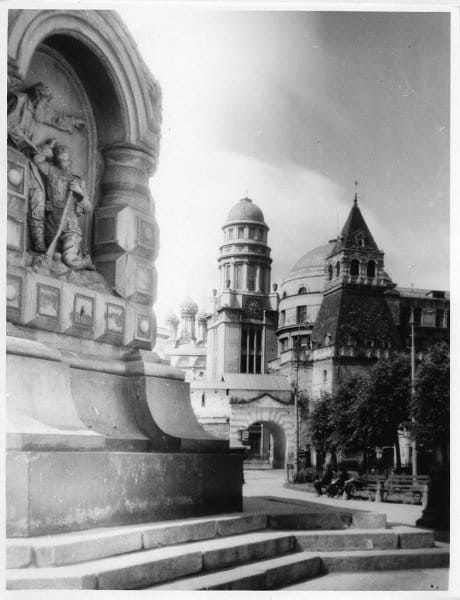
Ilyinsky Gates, Moscow
Yuri Yeremin, Ilyinsky Gates, early 1910s; public domain (Wikimedia Commons, MAMM / MDF). Source: Ilyinsky Gates, Moscow at Wikimedia Commons, credited MAMM / MDF via russiainphoto.ru

With other styles
Pairs with Pictorialism. Take the parent's soft, hand-printed salon picture and set it in Russian streets, Crimean villas and veiled portraits, printed in bromoil or gum rather than platinum.
The opposite: Soviet socialist realist press photography. The press look that replaced it is sharp, high-contrast and public; choose pictorialism for a private, hand-printed, elegiac picture, and the press look for an affirmative one.
The opposite: New Vision. New Vision tilts the camera and sharpens; keep the camera level and the edges soft when the brief is spiritual or elegiac.
Sources
- Berezner and Tchmyreva, Russian Pictorialism: The Good, The Pure, And The Everlasting, Aperture, 2003: https://archive.aperture.org/article/2003/01/01/russian-pictorialism-the-good-the-pure-and-the-everlasting
- Richard-Carvajal, The photo style that socialist realism crushed, The Moscow Times, 30 October 2014: https://www.themoscowtimes.com/2014/10/30/the-photo-style-that-socialist-realism-crushed-a40956
- Yuri Eremin, Wikipedia: https://en.wikipedia.org/wiki/Yuri_Eremin
- Wikimedia Commons, Category Photographs by Yuri Petrovich Yeryomin: https://commons.wikimedia.org/wiki/Category:Photographs_by_Yuri_Petrovich_Yeryomin