Styles / Digital & social
K-pop fansite (homma) photography
- Key: the open sky, all around and above, soft.
Open shadows: bright surroundings (walls, ground, sky) fill them; no reflector needed.
Schematic, not to scale: worked out from the style’s choices. No set-up of this style has been rendered yet.

Hoshi at a fansign in October 2015 04
HONEYCHIPS, Hoshi at a fansign in October 2015 04, 18 October 2015, HONEYCHIPS / Wikimedia Commons, CC BY 4.0. Source: Hoshi at a fansign in October 2015 04 at HONEYCHIPS; Wikimedia Commons

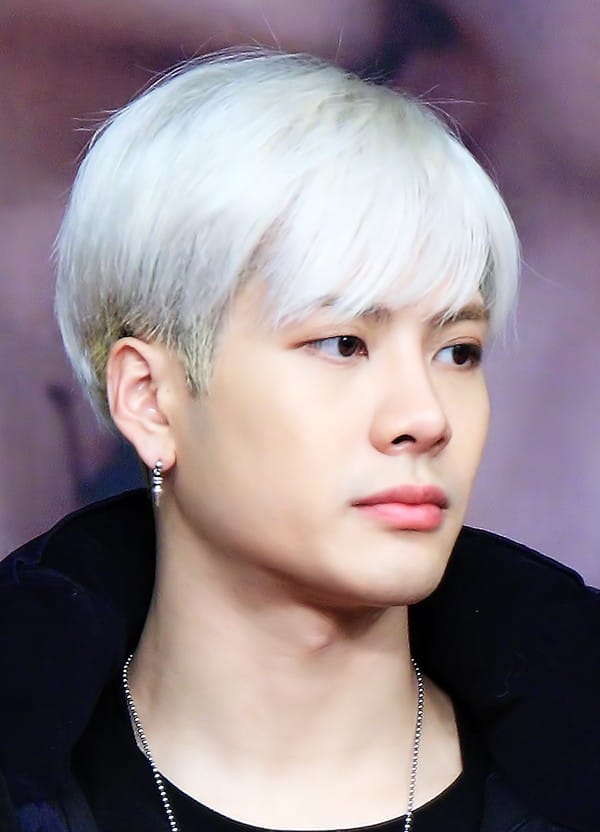
Jackson Wang at a fansigning event in Yeongdeungpo, Seoul, 5 November 2015
HoneyJackson852, Jackson Wang at a fansigning event in Yeongdeungpo, Seoul, 5 November 2015, HoneyJackson852 / Wikimedia Commons, CC BY 4.0. Source: Jackson Wang at a fansigning event in Yeongdeungpo, Seoul, 5 November 2015 at HoneyJackson852; Wikimedia Commons

Fan-made portraits isolate a particular idol from public appearances rather than construct an agency's album concept. Tight, often vertical long-lens frames favour an attentive glance, smile or heart gesture; smooth, bright faces and softened backgrounds turn event coverage into an affectionate serial portrait. Pictures circulate through fan accounts and sometimes printed fan goods, not just the music press.
Built on two systems: Telephoto colour and Bright selfie. What systems are.
Shoot sheet for your kit A prompt for an image model The photographs
How the look is made
- Concentrate an event series on one performer, selecting expressions and small gestures rather than a complete account of the stage.
- Isolate the face or upper body with a long lens and a tight vertical crop, keeping distracting surroundings out of focus.
- Wait for a smile, a glance towards the audience or a playful hand sign without demanding access or interrupting the event.
- Work from an authorised audience position with the light already present; preserve facial detail rather than making silhouette and stage spectacle the subject.
- Keep the face legible and the colour gentle, using restrained local exposure adjustments and a smooth finish without changing identity or skin tone.
- Sequence the selected portraits as a credited event set; retain the maker's attribution and distinguish photographs from later edits.
Shoot sheet for your kit
Fill in your camera, lenses and lights, and the sheet says which light plays each part, what to work around and where to start on your camera. Without a kit it starts on a full-frame camera.
Light
Key: the open sky, all around and above, soft.
- Open shadows: bright surroundings (walls, ground, sky) fill them; no reflector needed.
- Shadow edges
- Shadows that fade gradually from light to dark, cast by a large or diffused light: a window, a softbox, a cloudy sky.
- Shadow depth
- Shadows kept light and full of detail by a reflector, a fill light, bounce or bright surroundings (a low lighting ratio, up to about 3:1: the shadow side at most a stop and a half darker).
How the style is lit
- Inferred fan-event lighting situation: existing illumination on the face, with soft shadow transitions and enough ambient fill to keep the eyes and shadow cheek readable; the photographer does not arrange a portrait studio, and the specimens do not document a lighting rig.
- Inferred concert-light alternative: available spotlights or coloured stage washes, timed for a readable face; this is a reconstruction of an event-light situation, not a documented rig for the fan-sign specimens.
- Open-shade daylight at an authorised public appearance, without bringing lights or obstructing the event; an inferred outdoor alternative, not the lighting of the inspected specimens.
This plan is worked out from the style’s choices, so it is drawn as a schematic. One way to get the light, not a record of how any photograph was lit.
Lens and settings
Start at
On a full-frame camera: the same depth of field and exposure as the style’s own numbers, in the same light. Then meter and adjust.
- Then
- 200–400 mm · f/2.8–f/5.6 · 1/1000–1/250 s · ISO 400–3200 on full frame, inferred from the gear and the look. Working ranges reconstructed for long-lens, face-isolating event portraits, not a measured norm across fansites. One born-digital fan-sign specimen records 200 mm, f/2.8, 1/250 s and ISO 1600 on a cropped-sensor camera; the full-frame framing range and aperture range here are inferred, not that file's literal settings.
- White balance
- Balance for a readable face under the available event light, leaving background colour distinct; avoid treating pale skin or a particular complexion as the definition of beauty.
- Focal length
- A long lens stacks distant planes close together.
- Focus
- One plane sharp, the rest melting into blur and bokeh.
- Angle
- The camera at the height of a standing person or of the subject.
- Balance
- The subject in the middle, the frame balanced around it.
- Crop & fill
- The edges cut into the subject: heads, limbs or objects run out of frame.
- Instant
- Movement stopped dead by a fast shutter or flash. Gesture and geometry peak together in one instant.
Direct
The photographer generally selects from an appearance already in progress: an averted attentive gaze, a smile, or a hand holding a gift. At fan signs the subject may look towards a fan camera or form a heart, but a near-frontal gaze does not prove eye contact with that particular photographer; no coercion or interruption is implied.
- Head & gaze
- Looking straight into the camera, so the subject meets the viewer’s eye. Eyes off the frame, past the camera or into the distance, as if lost in thought.
- Arms & hands
- Signs made at the camera: the V sign, heart hands, finger hearts, a thumbs-up, pointing at the lens.
- Expression
- A smile, posed or natural, lips closed or showing teeth.
- The moment
- People photographed as they are, unaware or unconcerned.
- With the sitter
- The subject performs for the camera and shapes the picture.
Style the set
Photograph the appearance's existing outfits, groomed hair and make-up, from coordinated performance clothing to a cap and casual knitwear. These are the subject's or event team's choices, not a wardrobe or set arranged by the fansite photographer; crop around surrounding bodies and event furniture rather than rebuilding the scene.
- Clothes
- Best clothes, jewellery and accessories put on for the studio or the occasion.
- Hair & make-up
- Groomed hair and finished make-up that still look natural: even skin, defined eyes, neat brows.
Finish
- Colour
- White balanced to the light, so whites stay white and skin, food and products keep their real colour, with no overall cast.
- Digital & other
- A modern digital camera: clean, detailed, neutral.
- Texture
- Smooth tones with no visible grain.
- Post-production
- Perfected skin and surfaces.
- Shown as
- Pictures made and shown as a set.
- Shown in
- Pictures made for a scrolling feed.
- Frame
- A tall frame made for phones and screens.
Stay away from environmental, wide angle, scratches, dust & decay, visible grain, constructed set & miniature, objective & scientific and awkward & in-between.
Before you shoot it
This is a living fan community's creative labour and a record of identifiable performers, not permission to copy a particular maker or manufacture access to a real idol. Credit and, where required, license the photographer's work; an open copyright licence does not waive portrait, publicity or event-access rights. Do not stalk private schedules, disclose travel details, buy leaked information, crowd airports, ignore no-photography rules or treat a public appearance as blanket consent. Give additional protection to minors. Smooth or bright skin is a descriptive convention, not an endorsement of whitening, body alteration or beauty hierarchies.
A prompt for an image model
No prompt for this style
Behind its pictures: living fan community and identifiable performers.
Its caution asks for genuine attributed specimens rather than imitation of community access and relationships, and forbids synthetic records of real appearances.
This is a living fan community's creative labour and a record of identifiable performers, not permission to copy a particular maker or manufacture access to a real idol. Credit and, where required, license the photographer's work; an open copyright licence does not waive portrait, publicity or event-access rights. Do not stalk private schedules, disclose travel details, buy leaked information, crowd airports, ignore no-photography rules or treat a public appearance as blanket consent. Give additional protection to minors. Smooth or bright skin is a descriptive convention, not an endorsement of whitening, body alteration or beauty hierarchies. Do not generate real performers or synthetic photographs presented as fan-made records of actual appearances; use the genuine, attributed specimens for historical study rather than imitation of this community's access and relationships.
Work with photographers of this tradition, or take only its light and lens (the shoot sheet above) without its people, places or rituals.
Photographs that define it
From open collections, shown whole with their credits. Later photographs are linked, not shown, while they are in copyright.

Onew at a fansign at IFC Mall in Yeouido on May 2015
Sweetcandy, Onew at a fansign at IFC Mall in Yeouido on May 2015, 29 May 2015, Sweetcandy / Wikimedia Commons, CC BY 4.0. Source: Onew at a fansign at IFC Mall in Yeouido on May 2015 at Sweetcandy; Wikimedia Commons

With other styles
The opposite: Concert and live-music photography. Keep the event's light but narrow the edit to one person's small expressions rather than beams, crowd scale and musical climax.
The opposite: K-pop concept photography. Distinguish found public-appearance portraits from agency-directed costumes, built sets and a coordinated album concept.
The opposite: Paparazzi photography. Do not confuse affectionate selection at permitted appearances with a mandate to follow private movements or seek a hostile reaction.
Sources
- https://abcnews.go.com/International/hommas-unique-part-pop-fandom-culture/story?id=64427195
- https://honeychips.tistory.com/33
- https://honeyjackson852.tistory.com/31
- https://commons.wikimedia.org/wiki/File:Hoshi_at_a_fansign_in_October_2015_04.jpg
- https://commons.wikimedia.org/wiki/File:Jackson_Wang_at_a_fansigning_event_in_Yeongdeungpo,_Seoul,_5_November_2015.jpg
- https://commons.wikimedia.org/wiki/File:Onew_at_a_fansign_at_IFC_Mall_in_Yeouido_on_May_2015.jpg