Pole dance
Four ways photographers shoot pole and aerial dancers: in a dark studio, on white, outdoors with a portable pole, and in heels on the studio floor. Each is a style with its own page; here they sit side by side, with the angles and poses they share.
Dark studio
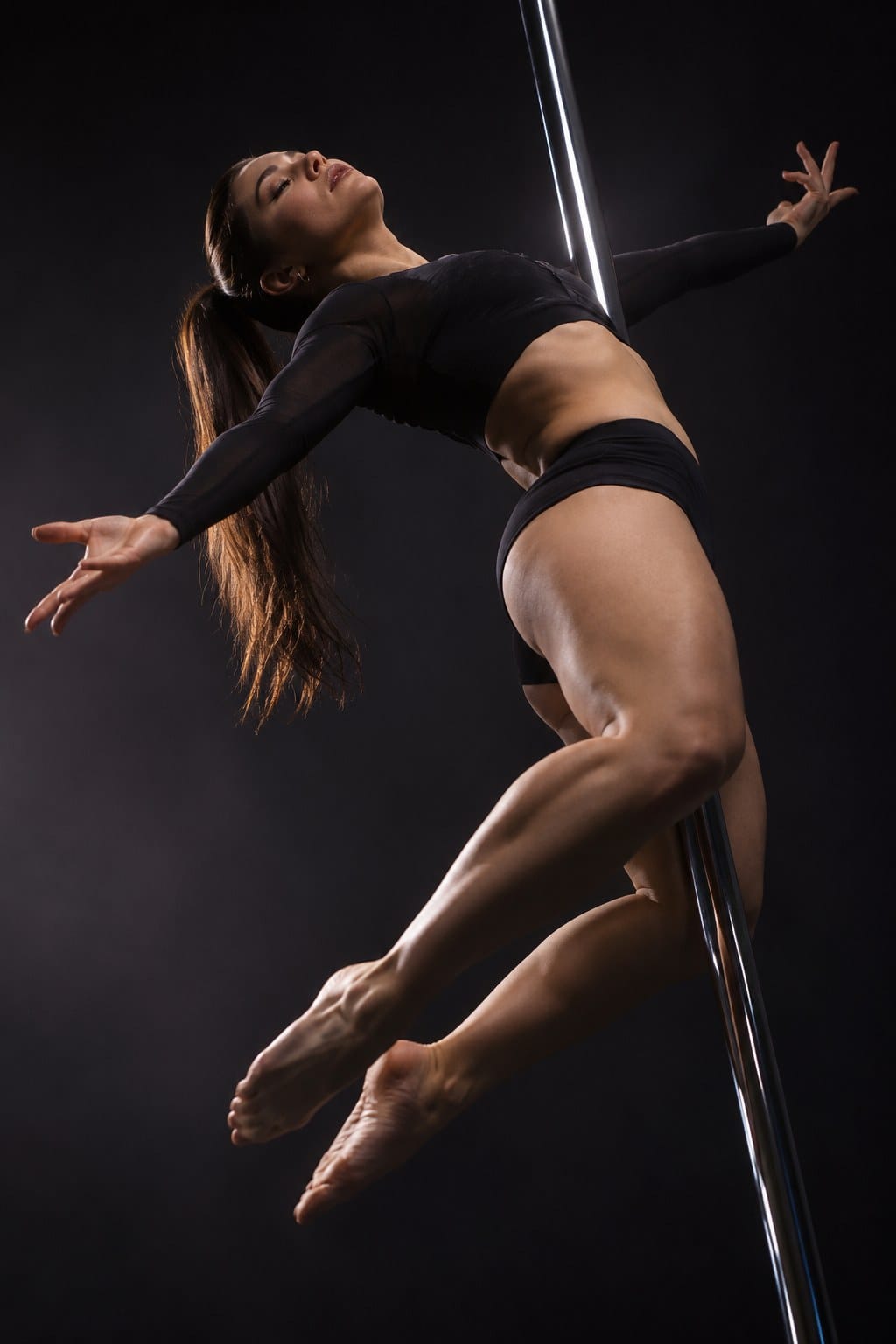
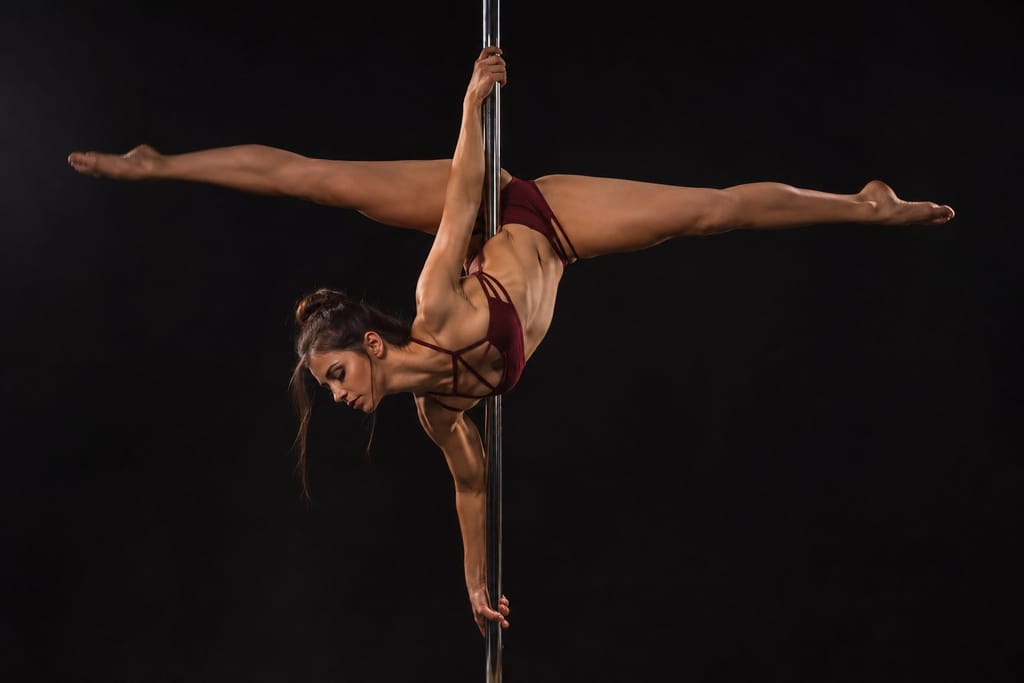
Low-key pole and aerial studio photography
2014–present
- Light
- Gridded strobes from both sides or from behind, so a bright edge runs along the body and the room falls to black.
- Ground
- A black backdrop or a wall left in shadow; the mirrors and pale floor are killed.
- Camera
- Middle distance, level with the trick, a normal lens; the whole shape in the frame.
- Poses
- Inversions, splits and laybacks held at their peak, on a pole, hoop or silks.
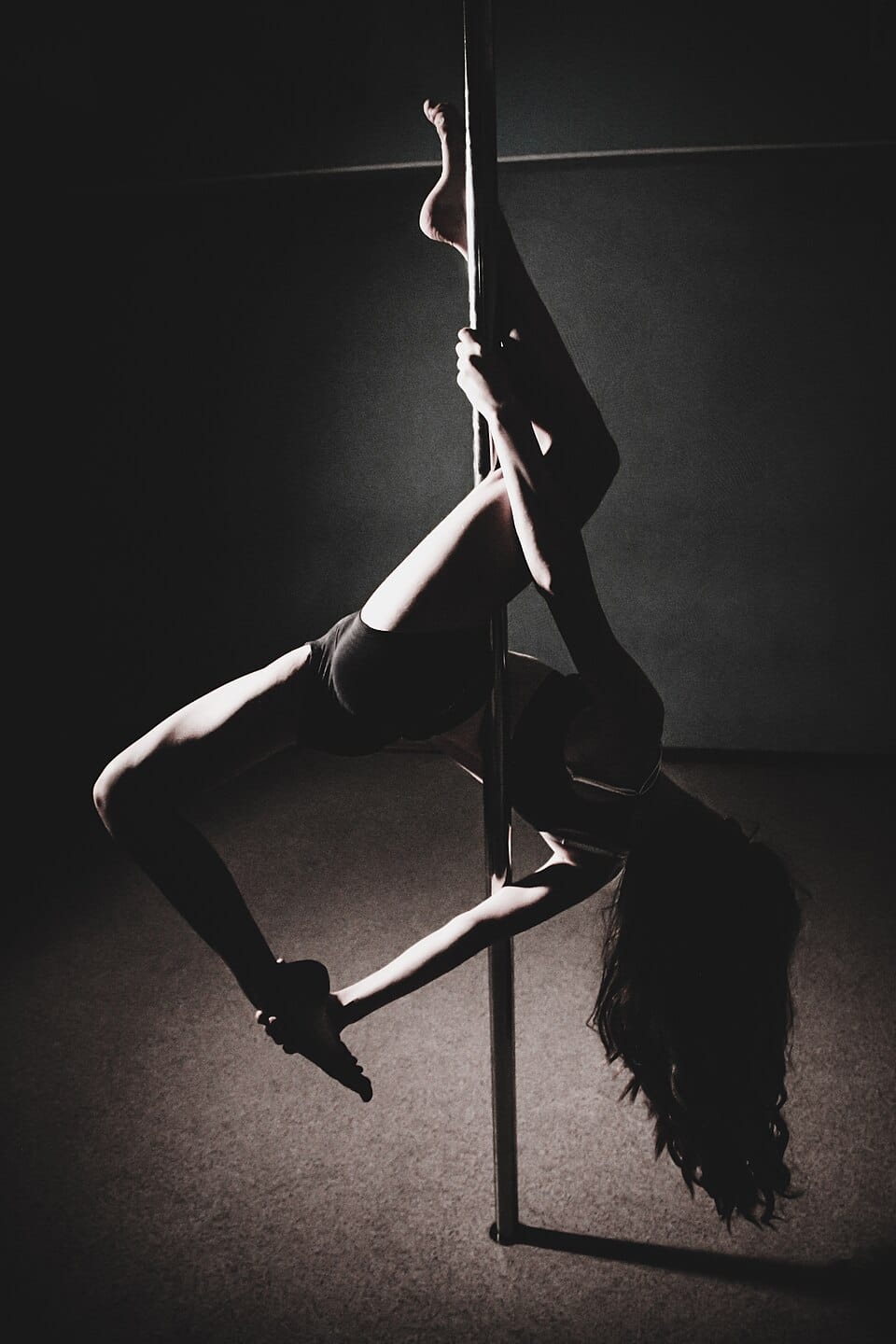
Alex Troshenkov, Pole Dance at Barnaut, 2016. Wikimedia Commons, CC BY-SA 2.0. Source: Pole Dance at Barnaut (pole dancing in Barnaul) at Wikimedia Commons (from the photographer's Flickr)
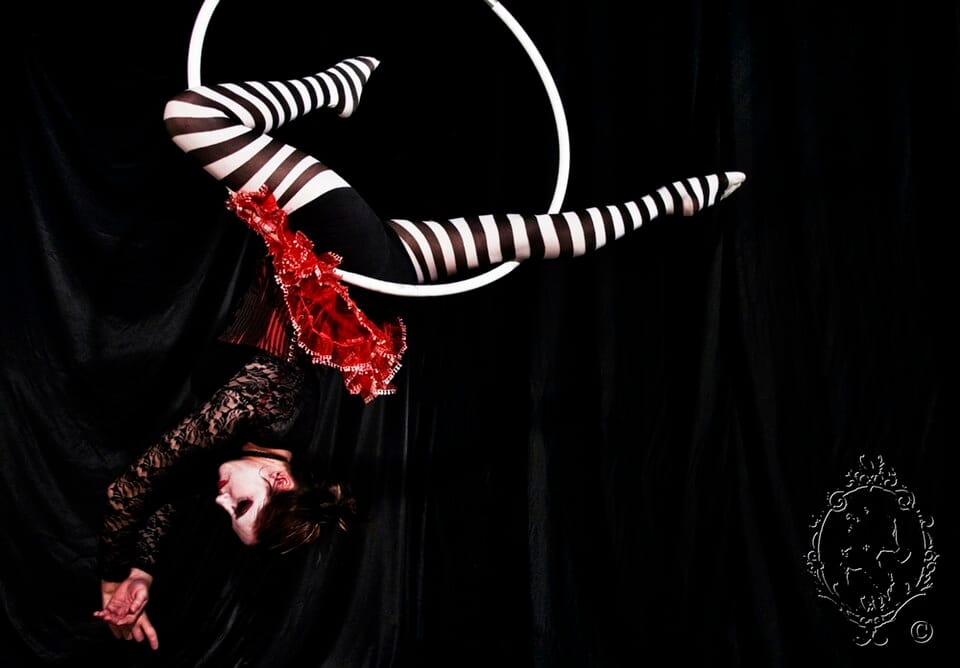
Courtney (With Grace), Aerial Ring Performance, 2009. Wikimedia Commons, CC BY 2.0. Source: Aerial Ring Performance at Wikimedia Commons (from the photographer's Flickr)
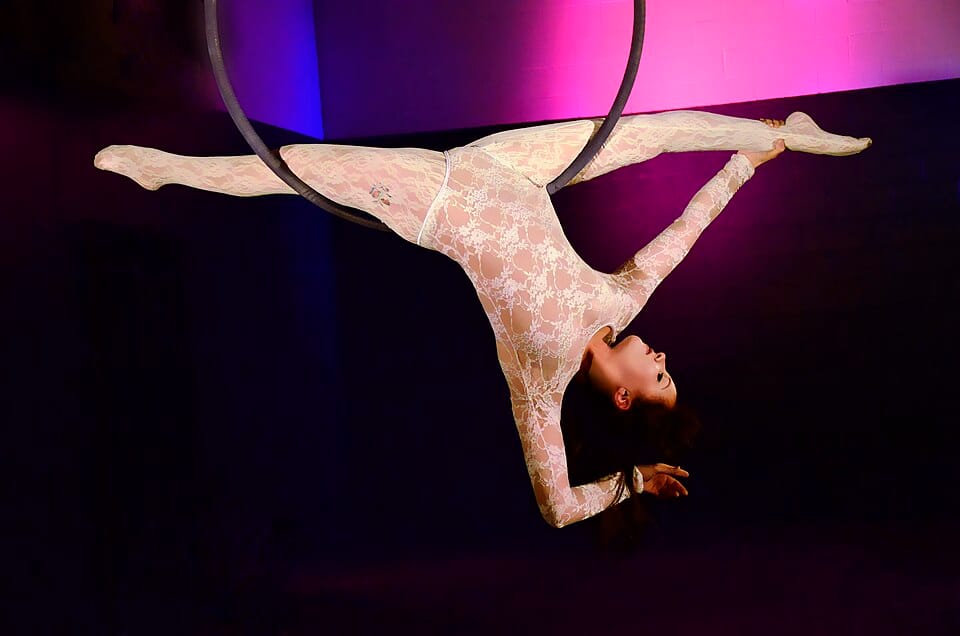
LucidLifeEnt, Hoop Performer, 2013. Wikimedia Commons, CC BY-SA 4.0. Source: Hoop Performer at Wikimedia Commons (own work of the entertainment agency)
White studio
High-key pole and aerial studio photography
2014–present
- Light
- A lit white background and soft light from the front or behind, so the outline reads clean with few shadows.
- Ground
- A white seamless or a white studio wall.
- Camera
- Middle distance with plenty of white around the figure.
- Poses
- The same tricks, plus standing and floor shapes at the foot of the pole, often with a smile to the lens.
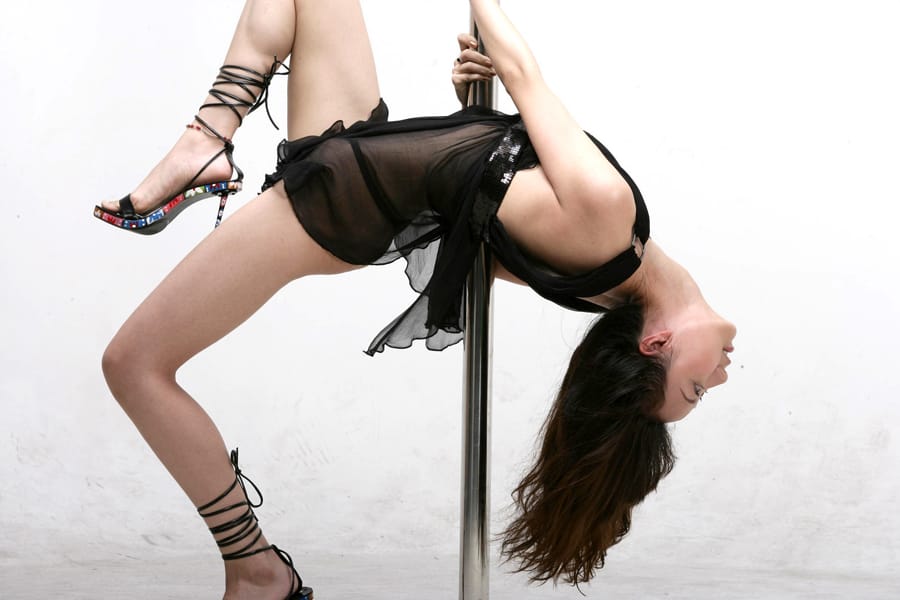
Sherry Zhang, Designs for my friends studio, 2006. Wikimedia Commons, CC BY 2.0. Source: Designs for my friends studio (Commons title: Asian model bending backwards with pole) at Wikimedia Commons (from the photographer's Flickr)
Outdoors
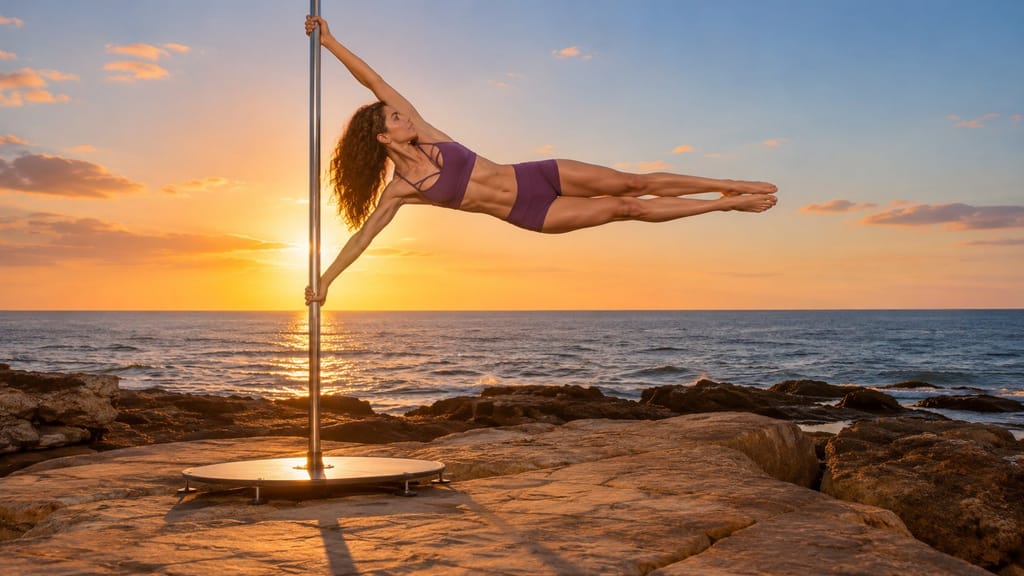
Outdoor and location pole dance photography
2009–present
- Light
- Daylight: low sun, golden hour or backlight, sometimes a reflector or a flash to lift the dancer.
- Ground
- The place itself: rock, shore, water, a roof or a street, with the horizon set on purpose.
- Camera
- Low and a little wide, so the pole rises into the sky; now and then far back, the dancer small in the land.
- Poses
- Inversions, splits and horizontal holds, climbed high so the body clears the horizon.
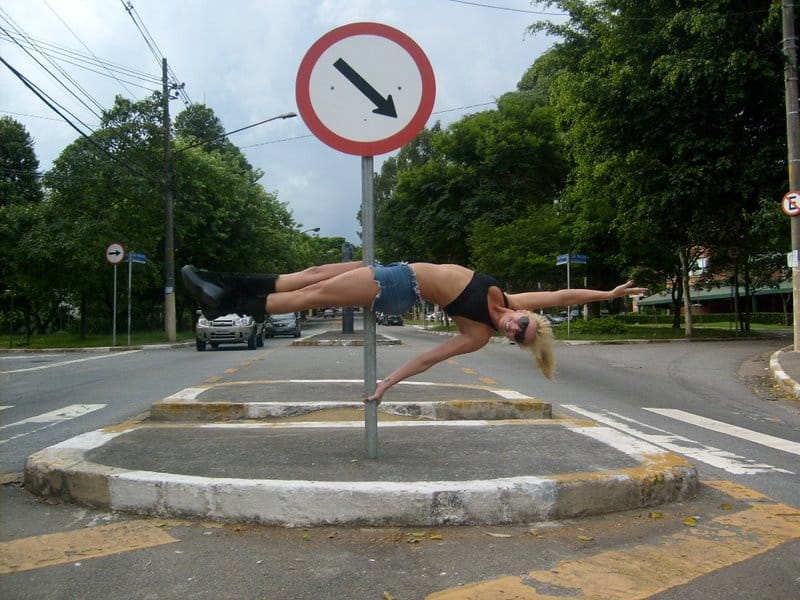
Elislike, Streetpoleplaca, 2009. Wikimedia Commons, CC BY-SA 3.0. Source: Pole dance street, realizado numa placa de trânsito (pole street on a traffic sign) at Wikimedia Commons
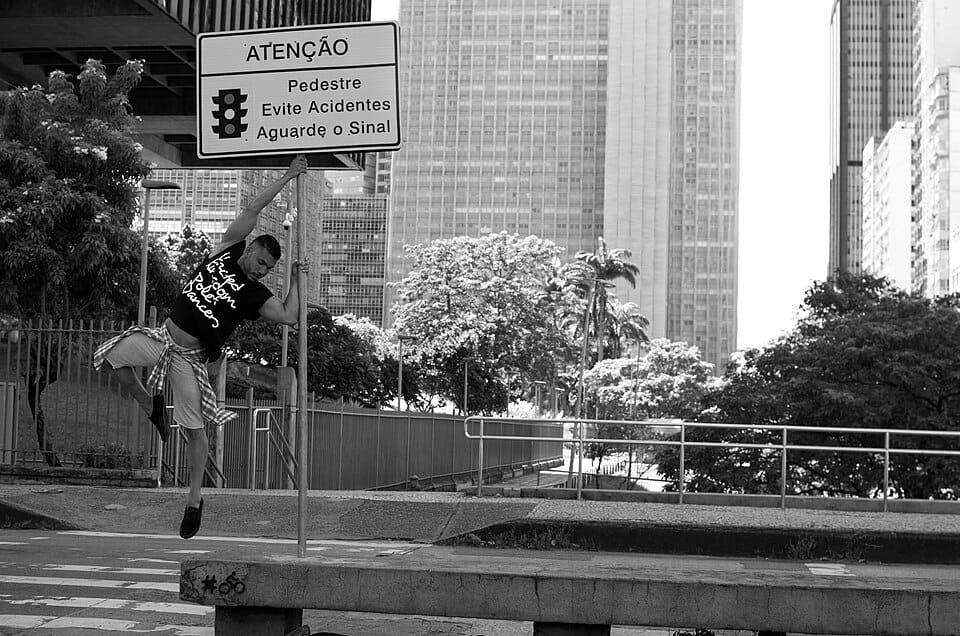
Ellen Pederçane, Aguarde o Sinal, 2019. Wikimedia Commons, CC BY-SA 4.0. Source: Aguarde o Sinal at Wikimedia Commons (Wiki Loves Folklore 2025, Brazil)
Heels and floor
Exotic pole and heels photography
2020–present
- Light
- Often the studio’s own daylight, mirrors and rows of poles left in; sometimes a dark corner or a coloured rim.
- Ground
- The pole studio as it is, a plain backdrop, or a beach behind a portable pole.
- Camera
- Low, near the floor, a little wide, so the platform heels and legs lead the frame.
- Poses
- Floor work in seven- or eight-inch heels: stands and splits at the foot of the pole, arches, looks back over the shoulder.
Its photographs are in copyright: three are linked on its page.
Angles
Where the camera goes changes the trick more than the light does. Most sessions use several.
- Level, middle distance
- The default: the camera level with the middle of the trick, the whole shape in the frame, with room past the toes and fingertips.
- From below
- At hip height or kneeling, for climbs, sits and high splits: the legs lengthen and the pole rises out of the frame.
- From above
- From a step stool or a ladder, for floor shapes and laybacks that open upwards: the floor turns into a plain ground.
- Wide, across
- For horizontal shapes (a Superman, a flag, an extended butterfly): step back or go wider and give the reach room on both sides.
- From behind
- For the arch of a layback, the line of the back in a split, the head turned back over the shoulder.
- Close
- Between full frames: the grip of a hand or a heel on the pole, a pointed foot.
Poses
- Bring tricks you can hold on demand, simple ones included: a pole sit, a layback, a crucifix, a leg hang, a butterfly, a Superman; then one or two harder shapes. A clean simple shape looks better than a strained hard one.
- Agree for each trick which side faces the camera. On a static pole in front of a backdrop the camera cannot walk round, so the dancer picks the starting side, or a helper turns the spinning pole a few degrees.
- Hold each shape at its peak for a few frames, and shoot the movement between shapes too, at 1/500 s or faster or with flash.
- Try the gaze in more than one direction for the same shape: up the pole, along the leg, down, to the light, once to the lens.
- Point the feet, lengthen the fingers, and turn the free palm away from the camera in laybacks, planks and Supermans.
- Breathe through the hold; a held breath shows in the face.
- Adults only, with consent for every picture and every place it is shared. Keep holds short and a mat or spotter under inversions, and never ask for a trick the dancer has not offered.
From the four styles’ own entries and their posing directions, with the International Pole Industry Association’s guide for pole photographers (2025, from PoleCon’s photographer), Pole Fit Freedom’s shoot tips and glossary of moves, The Polept’s shoot preparation tips, and an exotic teacher’s account of her own shoots in The Vibes (2021).
Made by an AI model
New pictures of these styles, each with invented adults, checked against the style’s choices. Not photographs, and not of anyone real.